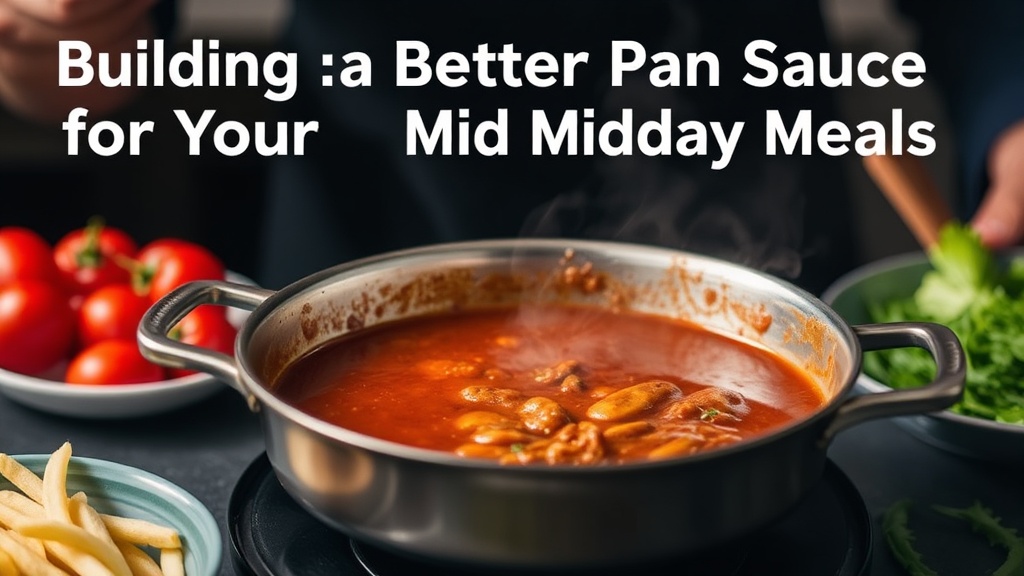
Building a Better Pan Sauce for Your Midday Meals

You finish searing a chicken breast or a piece of salmon, and you're left staring at a pan containing a layer of brown, stuck-on bits and a pool of oil. Most people see this as a mess to be scrubbed away, but those bits—the ones that stuck to the bottom of the pan—are actually concentrated flavor. This process of turning those leftover bits into a silky, savory sauce is what separates a basic cook from someone who truly understands how to build depth in a dish. It's the difference between a dry protein and a restaurant-quality meal that pulls everything together.
A pan sauce (or a pan gravy) relies on a process called deglazing. When you cook proteins, they undergo the Maillard reaction, creating that brown crust. Those browned bits are called "fond." If you just toss the pan, you're throwing away the best part of the meal. By adding liquid to the hot pan, you lift that flavor and incorporate it into a new, cohesive element. This technique works for almost any protein, whether it's a steak, pork chop, or even a roasted vegetable patty.
What is the right liquid for deglazing?
The liquid you choose determines the direction of your sauce. You can't just pick anything and expect it to work. If you want something rich and deep, a dry white wine or a light red wine is your best bet. For a more savory, hearty vibe, use a low-sodium chicken or beef stock. If you're feeling adventurous, a splash of balsamic vinegar or even a bit of high-quality apple cider can add a necessary bright note to a heavier meat dish.
When choosing your liquid, remember that the volume of the liquid should be enough to lift the fond but not so much that you're making a soup. A common mistake is adding too much liquid too quickly, which can cause a violent steam reaction. Instead, pour the liquid in small increments. If you're using wine, let it reduce by about half before adding your fats or thickeners. This ensures the alcohol is cooked off and the flavor is concentrated rather than harsh. You can check out more about the chemical properties of liquids and heat on sites like Serious Eats to understand how heat interacts with acidity and sugar.
How do I thicken a pan sauce without making it clumpy?
A thin, watery liquid isn't a sauce; it's just a broth. To get that luscious, coat-the-back-of-a-spoon texture, you need a thickening agent. The most traditional method is a "beurre manié." This is a simple mixture of equal parts softened butter and flour. You whisk a small amount of this paste into your simmering liquid, and it thickens the sauce almost instantly without the risk of flour clumps that you get when adding dry flour directly to a hot pan.
Another way to achieve this is through reduction. If you have a high-quality stock or wine, simply let it simmer and evaporate until it reaches the desired consistency. This is a more natural way to thicken, though it takes a bit more patience. If you're using a starch like cornstarch, make sure to mix it with a little cold water first (creating a "slurry") before adding it to the hot liquid. Adding dry starch directly to a hot pan usually results in little white lumps that ruin the texture of your sauce. For more advanced thickening techniques, the King Arthur Baking archives offer great insight into how various starches behave under heat.
The Step-by-Step Pan Sauce Process
- Sear your protein: Cook your meat or vegetable until it has a deep, golden-brown crust. Remove the protein from the pan and set it aside to rest.
- Sauté aromatics: If there's too much fat left in the pan, pour some out, but leave a tablespoon or two. Add finely minced shallots or garlic. Cook them until they are soft and fragrant, but don't let them burn.
- Deglaze: Turn the heat down slightly. Pour in your liquid (wine, stock, or even a splash of vinegar). Use a wooden spoon to scrape all those brown bits from the bottom of the pan. This is the most important part.
- Reduce: Let the liquid simmer until it reduces by half or reaches a slightly syructionary consistency.
- Finish with fat: This is where the magic happens. Whisk in a cold knob of butter or a splash of heavy cream. This adds the "gloss" and the richness.
- Season: Taste it first. The reduction might have concentrated the salt, so add salt, pepper, or fresh herbs only at the very end.
Can I use a pan sauce for vegetarian dishes?
Absolutely. While many people associate pan sauces with meat, the technique is perfectly applicable to vegetables like mushrooms, cauliflower, or even thick slices of roasted eggplant. In a vegetarian version, you aren't looking for meat juices, but you are looking for the caramelized surface of the vegetable. For example, if you sear mushrooms in a pan with butter, the mushrooms will leave behind a beautiful, savory residue. You can deglaze that with a bit of vegetable stock and perhaps a touch of soy sauce or nutritional yeast for umami.
The key is to ensure the pan is hot enough to create that initial browning. If you just steam the vegetables, there won't be any fond to deglaze, and your sauce will lack depth. Aim for a high-heat sear first, then drop the heat before adding your liquids. This keeps the process controlled and ensures you actually build the layers of flavor that make a pan sauce worth the effort.
Don't be afraid to experiment with different combinations. A pan sauce is a living thing; it changes based on what you put in it. One day it might be a bright, lemon-and-caper sauce for a fish fillet, and the next it might be a heavy, red-wine-and-shallot sauce for a steak. The tools are the same, but the results are endless. Just remember the golden rule: the pan is your canvas, and those brown bits are your paint.