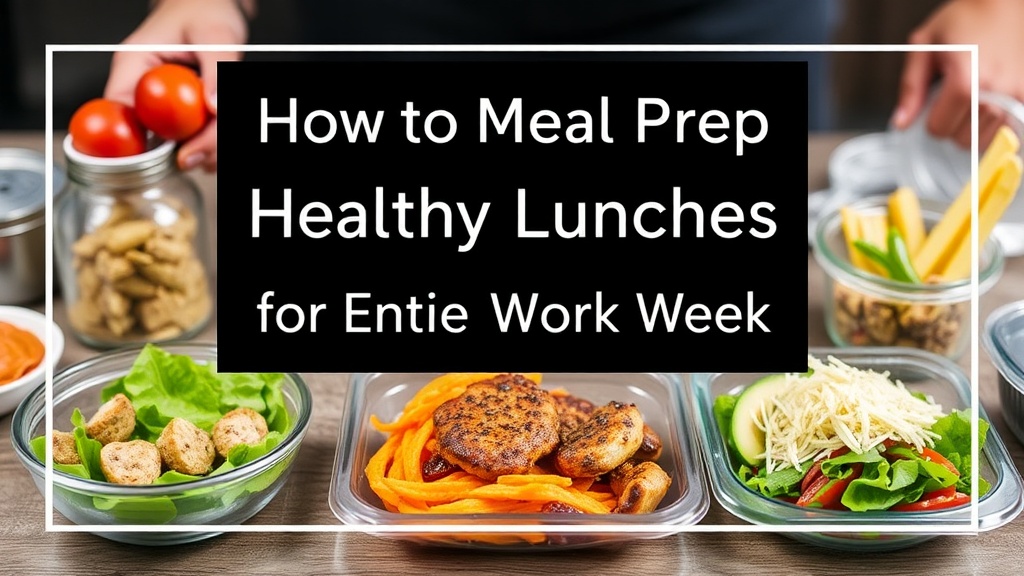
How to Meal Prep Healthy Lunches for the Entire Work Week

Meal prepping healthy lunches saves time, reduces stress, and keeps your work week on track nutritionally. This guide breaks down exactly how to plan, shop, prep, and store five days of balanced lunches — complete with storage strategies, container recommendations, and realistic recipes that hold up from Monday morning through Friday afternoon.
What Is Meal Prepping and Why Does It Work?
Meal prepping means preparing ingredients or full meals in advance — typically on Sunday — so lunch is grab-and-go ready. The strategy works because it removes decision fatigue during busy workdays and prevents the 11:47 AM scramble for takeout. Studies from the Johns Hopkins Medicine show that people who plan meals consume more nutrients and fewer calories than those who wing it.
Here's the thing — meal prep doesn't mean eating identical containers of bland chicken and broccoli for five days straight. That's a myth that scares people away. Modern meal prep includes batch-cooked proteins, versatile grains, roasted vegetables, and fresh components added day-of. The goal is efficiency, not monotony.
Most successful meal preppers spend 2-3 hours on Sunday preparing components rather than full meals. This approach — often called "component prep" — offers more variety. Monday might be quinoa bowls with roasted vegetables. Tuesday becomes wraps with the same ingredients. Wednesday? A grain salad with whatever's left. Same prep work, different eating experiences.
How Do You Plan Meals for a Full Work Week?
Start with a simple template: two proteins, two grains or starches, three vegetables, and two sauces or dressings. This combination yields enough variety for five distinct lunches without overwhelming your grocery list or your schedule.
The catch? You've got to shop with storage in mind. Some ingredients hold beautifully for five days. Others wilt, sog out, or lose flavor by Wednesday. Here's what works:
| Category | Long-Lasting (5+ Days) | Best Mid-Week | Add Fresh Day-Of |
|---|---|---|---|
| Proteins | Chicken thighs, hard-boiled eggs, baked tofu, chickpeas | Salmon, ground turkey, tempeh | Deli turkey, canned tuna, rotisserie chicken pieces |
| Grains | Quinoa, farro, wild rice, wheat berries | Brown rice, couscous, orzo | Fresh bread, tortillas, lettuce wraps |
| Vegetables | Roasted broccoli, cauliflower, carrots, beets, squash | Green beans, asparagus, bell peppers | Spinach, arugula, cherry tomatoes, avocado |
| Sauces | Hummus, pesto, tahini dressing, peanut sauce | Vinaigrettes, yogurt-based dressings | Lemon wedges, hot sauce, fresh herbs |
Worth noting: Montreal's Jean-Talon Market (or your local equivalent) offers exceptional produce for meal prep. The quality difference matters — a carrot from a local farmer lasts longer in your fridge than one that's been trucked across continents.
Plan your prep order strategically. Start items that take longest first — grains soaking, proteins marinating, oven preheating. While the oven runs, wash and chop vegetables. While proteins rest, assemble sauces. Efficiency compounds when you sequence tasks properly.
What Containers and Equipment Do You Actually Need?
Quality containers make or break the meal prep experience. Glass containers (Pyrex or Anchor Hocking) last years, don't stain, and microwave safely. That said, they're heavy — not ideal if you're commuting on foot or by bike. For portability, the Glasslock or Prep Naturals glass sets offer good seals without excessive weight.
Plastic has its place. Rubbermaid Brilliance containers resist staining better than cheaper alternatives and seal tightly enough for soups. They're BPA-free and dishwasher-safe — practical for daily use. Just avoid microwaving plastic whenever possible, even "microwave-safe" versions.
Beyond containers, three tools transform meal prep:
- A large sheet pan — the Nordic Ware Baker's Half Sheet fits most ovens and handles heavy loads of roasted vegetables without warping
- Multiple cutting boards — cross-contamination slows you down; having separate boards for proteins and vegetables keeps the flow moving
- A rice cooker or Instant Pot — set-it-and-forget-it grains free up stovetop space and mental energy
Labeling matters more than you'd think. Masking tape and a Sharpie work fine, but dissolvable labels (Avery makes reliable ones) prevent that frustrating glue residue that builds up over months of reuse. Date your containers. "Cooked Sunday" tells you more than "chicken" when you're deciding whether Thursday's lunch is still viable.
What Are the Best Healthy Lunch Recipes for Meal Prep?
The best prep-friendly lunches share characteristics: they taste good cold or reheated, combine protein with fiber for sustained energy, and include varied textures so each bite interests your palate. Below are three templates that satisfy all criteria.
Mediterranean Grain Bowls
Base: Farro or quinoa cooked in vegetable broth for extra flavor.
Protein: Baked falafel (homemade or Trader Joe's frozen — both work) or herbed chicken thighs.
Vegetables: Roasted zucchini, bell peppers, and red onion.
Toppings: Crumbled feta, kalamata olives, fresh parsley.
Sauce: Lemon-tahini dressing (tahini, lemon juice, garlic, water to thin).
These bowls improve over 2-3 days as flavors meld. The tahini dressing goes in a small separate container — drizzle before eating to prevent sogginess.
Asian-Inspired Noodle Boxes
Base: Soba noodles tossed with sesame oil after cooking — this prevents clumping and adds flavor.
Protein: Baked tofu (pressed firm tofu, cubed, tossed with soy sauce and cornstarch, baked 25 minutes at 400°F) or shredded rotisserie chicken with hoisin.
Vegetables: Shredded purple cabbage, julienned carrots, edamame.
Toppings: Sesame seeds, sliced scallions (add fresh).
Sauce: Peanut sauce (natural peanut butter, soy sauce, rice vinegar, ginger, sriracha).
Soba works exceptionally well cold, making this ideal for offices without reliable microwaves. The cabbage maintains crunch through Friday when stored properly.
Southwest Chicken Burrito Bowls
Base: Brown rice seasoned with lime and cilantro.
Protein: Chicken breasts rubbed with cumin, chili powder, and smoked paprika, then baked.
Vegetables: Roasted sweet potato cubes, corn (frozen works fine), sautéed peppers and onions.
Toppings: Shredded cheese, salsa, Greek yogurt (sour cream substitute).
Sauce: Chipotle-lime crema or salsa verde.
This recipe appears frequently on Budget Bytes — a trusted resource for realistic, cost-effective meal prep. The combination of complex carbs from sweet potato and protein from chicken provides steady afternoon energy without crashes.
How Should You Store and Reheat Meal Prepped Lunches?
Proper storage extends freshness and — more importantly — prevents foodborne illness. The general rule: refrigerate cooked food within two hours, and keep your fridge at 40°F or below. Most meal prepped lunches stay safe for 3-4 days in the refrigerator; Monday's prep should carry you through Thursday, with Friday being a "fresh add" day or a planned restaurant lunch.
Freezing opens more possibilities. Soups, stews, chilis, and burritos freeze beautifully for up to three months. Individual portions in freezer-safe containers mean you're never more than a microwave session away from lunch — even on weeks when Sunday prep doesn't happen. Label everything with contents and date. "Mystery container" syndrome leads to waste.
Reheating requires attention:
- Remove any fresh components (greens, herbs, crunchy toppings) before microwaving
- Add a damp paper towel over the container to prevent drying — rice especially benefits from this
- Heat to 165°F internal temperature (use a food thermometer if your office microwave is unreliable)
- Stir halfway through heating for even temperature distribution
Worth noting: not everything needs reheating. Grain salads, cold soba, hummus bowls, and wraps often taste better at room temperature. Pack those on days when microwave access is uncertain.
Monday Morning Assembly Strategy
The difference between Sunday warriors and consistent meal preppers often comes down to Monday morning execution. Prep five containers Sunday evening, sure — but also prep your Monday bag. Include utensils (the Humangear GoToob works beautifully for dressings), napkins, and any snacks. This 5-minute Sunday investment prevents the "forgot my lunch" excuse that derails the entire week.
"The goal isn't perfection. The goal is making the healthy choice the easy choice." — This principle, emphasized by nutrition researchers at Harvard T.H. Chan School of Public Health, underpins sustainable meal prep habits.
That said, flexibility matters. Life intervenes — impromptu lunch meetings, forgotten containers, days when yesterday's quinoa just doesn't appeal. Build in one "escape hatch" day per week. Thursday or Friday works well. This permission prevents the all-or-nothing mindset that kills meal prep routines.
Common Mistakes to Avoid
Overpacking vegetables that release water (zucchini, cucumbers, raw tomatoes) turns Friday's lunch into a soggy mess. Roast those instead — or pack them in a separate compartment.
Underseasoning is equally problematic. Food tastes more muted when cold. Increase salt, acid, and spices by 20% compared to hot-served dishes. A squeeze of lemon or dash of hot sauce revives Thursday's container.
Finally, don't prep five identical meals unless you genuinely love repetition. The component method — mixing and matching throughout the week — maintains interest and nutritional variety. Monday's roasted chicken becomes Tuesday's wrap filling, Wednesday's salad topper, and Thursday's grain bowl base. Same protein, different experience.
Start small if five days feels overwhelming. Prep three lunches this Sunday. Notice how Tuesday and Wednesday feel — less rushed, more nourished, slightly smug when colleagues debate between mediocre sandwich shops. That's the meal prep payoff. Build from there.
Steps
- 1
Plan Your Menu and Shop for Ingredients
- 2
Prep Proteins, Grains, and Vegetables
- 3
Assemble, Portion, and Store Your Lunches