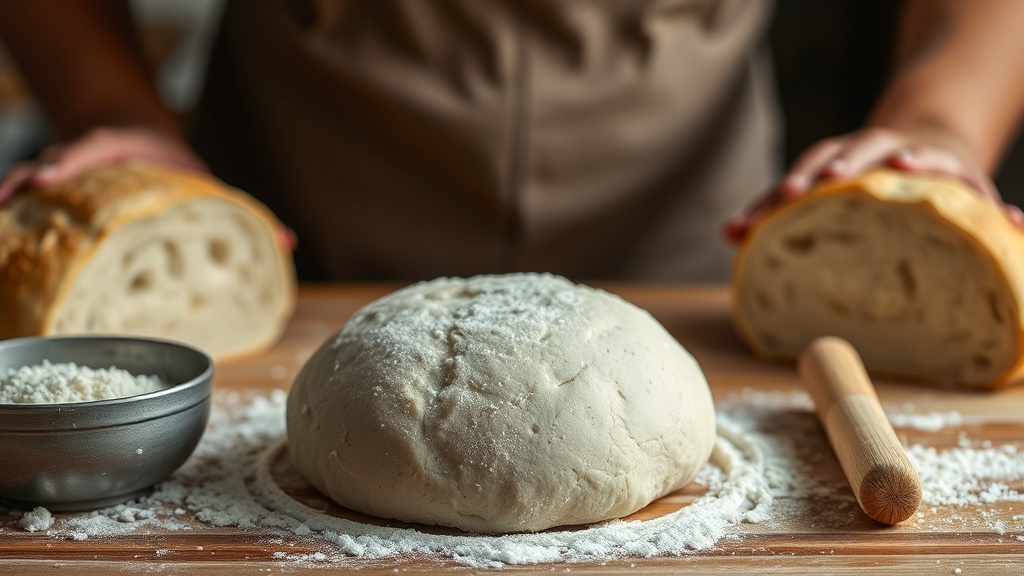
Why Your Homemade Bread Dough Always Stays Flat

The Myth of the Magic Ingredient
Most people believe that a flat loaf of bread is the result of a bad recipe or a faulty yeast packet. They assume that if they just added more sugar or a pinch more salt, the dough would suddenly spring to life. This is a mistake. The real culprit isn't a single ingredient; it's usually a fundamental misunderstanding of how temperature and fermentation interact with biological processes. Bread isn't just a mixture of flour and water—it's a living system that responds to its environment in very specific ways.
If you've ever stared at a heavy, lifeless mound of dough in your mixing bowl, you aren't alone. It's frustrating to spend an hour kneading only to end up with something that resembles a brick rather than a light, airy boule. Usually, the issue lies in the invisible mechanics of heat and hydration rather than a lack of expensive equipment or high-end organic flour.
Is Your Water Too Hot or Too Cold?
One of the most frequent errors I see is the misuse of water temperature. Yeast is a living organism, and like anything alive, it has a strict comfort zone. If you use water that is too hot—anything over 115°F (46°C)—you aren't just "activating" the yeast; you are killing it. Once the yeast cells are dead, no amount of kneading or waiting will produce gas. On the other hand, if your water is too cold, the yeast will simply go into a state of dormancy, leaving your dough sluggish and dense.
To get the best results, aim for lukewarm water, roughly 90°F to 95°F. This provides a gentle nudge to the yeast without the shock of high heat. You can check this easily with a thermometer or by testing the water against your wrist; it should feel barely warm, not hot. For more technical details on how temperature affects biological fermentation, the King Arthur Baking resources offer deep dives into thermal control for dough.
Why Does My Dough Lack Structure?
Even if your yeast is active, your dough might still fail to rise if you haven't built a proper gluten network. Gluten is the structural scaffolding that traps the carbon dioxide gas produced by the yeast. Without this network, the gas simply escapes, and your bread remains flat. This is where the distinction between mixing and kneading becomes vital. You aren't just combining ingredients; you are physically aligning protein strands.
Think of gluten like a balloon. If the rubber is weak or full of holes, the air escapes. If the dough is too wet (high hydration) and you haven't developed the strength through kneading or folding, the "balloon" will pop under its own weight. This is a common struggle for beginners working with high-hydration doughs. If you want to understand the chemistry of protein development, the Scientific American archives often discuss the molecular structure of dough components.
The Role of Salt in Fermentation Control
Salt is a misunderstood player in the baking process. Many people think salt is just for flavor, but it actually serves a structural purpose. Salt regulates the rate of fermentation. If you add too much salt directly to the yeast before mixing, it can inhibit the yeast's ability to work. However, if you leave it out entirely, the fermentation process can run too fast, leading to an over-proofed dough that collapses in the oven. A balanced amount of salt helps to tighten the gluten strands and keeps the yeast in check, ensuring a steady, controlled rise.
How Can I Tell If My Dough is Over-Proofed?
Over-proofing is the silent killer of beautiful loaves. It happens when you let the dough rise for too long, and the yeast consumes all the available sugars, exhausting itself. A dough that has been over-proofed will look bubbly and impressive right before it hits the oven, but the moment the heat hits it, the structure collapses. It's a heartbreaking sight to see a beautiful loaf deflate into a flat pancake.
A simple way to test your dough is the "finger poke test." Gently press your finger into the dough. If it springs back immediately, it needs more time. If it leaves a permanent indentation and doesn't spring back at all, it is likely over-proofed. You want a dough that holds the indentation slightly but still shows a bit of resilience. This indicates the yeast is still active and ready to fight the heat of the oven.
| Issue | Likely Cause | Quick Fix |
|---|---|---|
| Dense/Heavy Bread | Water too hot (killed yeast) | Use lukewarm water (90-95°F) |
| No Rise/Flat | Insufficient kneading | Develop gluten through more kneading |
| Collapsed in Oven | Over-proofing | Reduce rising time/monitor temperature |
| Crumb is too tight | Too much salt or low hydration | Adjust salt ratio and water levels |
Developing a sense for dough is an iterative process. You have to learn the feel of the material under your hands. It isn't about following a recipe perfectly; it's about reacting to what the dough is telling you. If the dough feels sticky and lacks tension, it needs more work. If it feels sluggish, it might just be too cold. Pay attention to these subtle cues, and you'll stop making bread that looks more like a brick and start making bread that actually breathes.