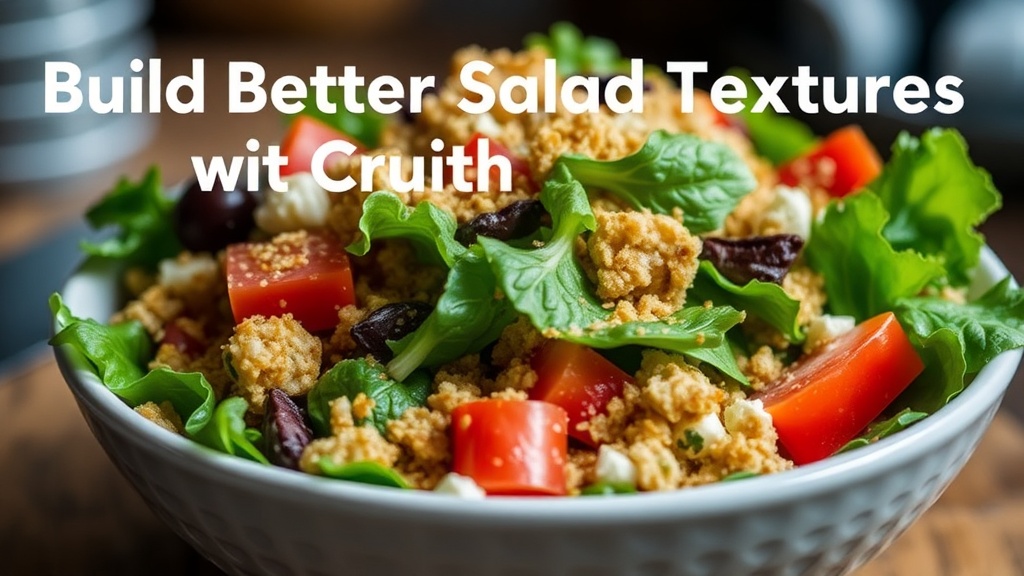
Build Better Salad Textures with Crunchy Elements

In this guide, you will learn how to move beyond soggy greens by integrating diverse crunchy elements into your salads. We’ll cover the science of texture, the best types of crunch for different dressings, and how to store these components so they stay crisp throughout your lunch.
Why Does Texture Matter in a Salad?
Texture matters because it dictates how much you actually enjoy eating a meal. A salad with only soft leaves and wet vegetables often feels one-dimensional and—let's be honest—a bit boring. Adding a "crunch factor" provides sensory contrast. It keeps your palate engaged. Without it, a salad is just a pile of wet vegetation; with it, a salad becomes a satisfying meal.
Think about the sensation of eating a well-made Caesar salad. You have the soft romaine, the creamy dressing, and then—bam—the sharp, salty crunch of a sourdough crouton or a toasted breadcrumb. That contrast is what makes you want to keep eating. If you find yourself bored with your midday meals, you're likely missing this structural variety.
I often see people making the mistake of adding too much liquid (like a heavy vinaigrette) too early, which turns even the best ingredients into a mushy mess. If you want to avoid this, you need to understand the different categories of crunch.
The Three Layers of Crunch
To build a truly great salad, you should aim for at least two of these three categories:
- The Snap: High-moisture vegetables like radishes, cucumbers, or bell peppers.
- The Crunch: Dry, brittle elements like toasted nuts, seeds, or croutons.
- The Bite: Heavier, more substantial textures like crispy chickpeas or toasted grains.
What Are the Best Crunchy Elements for Salads?
The best crunchy elements are those that complement your specific dressing and base greens. If you're using a heavy, creamy dressing like Blue Cheese or Caesar, you need a hard, sturdy crunch to stand up to that weight. If you're using a light citrus vinaigrette, a delicate nut or seed might be more appropriate.
Here is a breakdown of common ingredients categorized by their textural impact:
| Category | Examples | Best Paired With |
|---|---|---|
| Nuts & Seeds | Toasted Walnuts, Pepitas, Sunflower Seeds | Sweet or acidic dressings |
| Grains & Starches | Croutons, Crispy Farro, Toasted Panko | Creamy or heavy dressings |
| Legumes | Roasted Chickpeas, Crispy Lentils | Mediterranean or Middle Eastern flavors |
| Vegetables | Raw Radish, Jicama, Shaved Fennel | Light vinaigrettes |
If you want to get serious about your pantry staples, look for high-quality seeds. For example, using organic pumpkin seeds (pepitas) from a reputable source can make a massive difference in the flavor profile compared to generic, dusty versions. A good crunch should be flavorful, not just a way to add noise to the meal.
If you're already building a bowl, you might want to check out the grain bowl formula to see how to layer these textures effectively with your base grains.
How Do I Keep Salad Toppings from Getting Soggy?
To keep toppings from getting soggy, you must store them separately from the wet ingredients until the moment you are ready to eat. Moisture is the enemy of texture. If you toss your toasted almonds or croutons into a container with wet greens and dressing, they will turn into soft, unappeable lumps within an hour.
Here are my personal rules for maintaining texture during a workday lunch:
- The "Dry Layer" Rule: If you're meal prepping, keep your crunchy elements in a small, separate container or a silicone baking cup inside your main lunch box.
- The Dressing Delay: Never dress a salad with crunchy elements ahead of time. Even if you use a "salad shaker" bottle, wait until you are at your desk to combine them.
- The Moisture Barrier: If you must put everything in one container, put the greens on the bottom, the dressing in a separate tiny jar, and the crunchy elements in a dry compartment at the top.
This isn't just about being picky; it's about food science. When salt and acid hit a dry, crunchy surface, they immediately begin breaking down the cellular structure of the food. A toasted crouton is basically a sponge for moisture. Once it absorbs that liquid, the "crunch" is gone forever.
For more tips on making your lunches more interesting, you might find these creative lunch ideas helpful for your weekly rotation.
Which Nuts and Seeds Are Best for Salads?
The best nuts and seeds depend on whether you want a subtle accent or a dominant flavor profile. If you want a subtle accent, go with something like toasted pine nuts or sunflower seeds. If you want the crunch to be the star of the show, look toward larger, more textured options like chopped pecans or even candied walnuts.
A quick tip: always toast your nuts. Even if they are already "raw," a quick toss in a dry pan for two minutes will wake up the oils and make them significantly crunchier. It's a small step, but it's a massive upgrade. It's the difference between a mediocre salad and a restaurant-quality meal.
If you're looking for specific nutritional data on how these additions affect your caloric intake, the U.S. Food and Drug Administration provides extensive resources on food labeling and nutritional content that can help you track your intake more accurately.
Don't forget that texture isn't just about "hard" things. Sometimes, a "crunch" can be more of a "snap." For instance, if you're making a salad with a creamy base, you might want to try transforming your yogurt into a savory base and then topping it with very thin, crisp cucumber slices. The contrast between the creamy yogurt and the snappy cucumber is incredible.
One thing to watch out for: some people overdo the nuts. While they add great texture, they are also calorie-dense. I usually recommend a handful (about 1-2 tablespoons) as a topping rather than a primary ingredient. This keeps the salad balanced and prevents it from becoming too heavy.
When you're shopping, look for freshness. A stale walnut is a sad experience. If you're buying in bulk, store your nuts in the refrigerator or freezer to keep the oils from going rancid—this also helps maintain that crisp texture you're after.