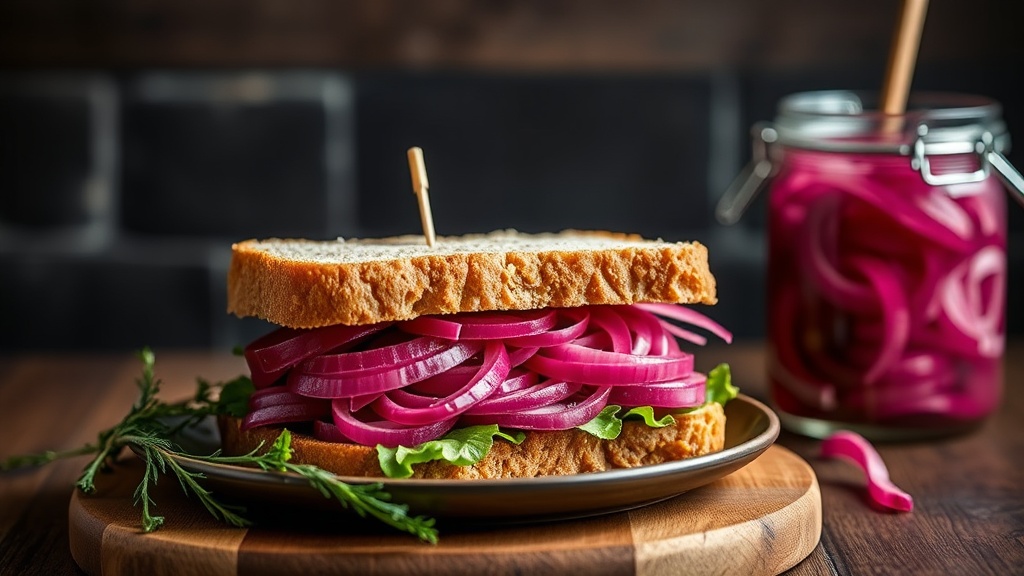
Elevate Your Sandwiches with Quick Pickled Red Onions

Did you know that a single spoonful of acid can change the chemical perception of fat on your tongue? Most people think a sandwich needs more meat or more cheese to satisfy a craving, but often, it just needs a hit of brightness. This guide covers how to make quick-pickled red onions at home, why they act as a flavor multiplier for heavy proteins, and how to use them to fix a dull lunch.
Pickling isn't just for the fancy deli down the street. It's a basic chemistry trick that anyone with a jar and a stove can master in ten minutes. You're essentially using vinegar to denature the proteins in the onion, which softens the harsh bite while preserving a crisp texture.
Why Should You Pickle Red Onions?
Pickled red onions provide a sharp, acidic contrast that cuts through the richness of fatty meats, avocado, or heavy cheeses. Without that acidity, a sandwich can feel one-dimensional or "heavy." The bright pink hue they add also makes a standard lunch look professional—it's a visual win too.
If you've ever eaten a heavy meat patty without any pickles or relish, you've felt that lack of balance. The onions act as a palate cleanser. They reset your taste buds between bites. It's a simple way to make a basic turkey sandwich or a fried egg wrap feel like something from a high-end bistro.
Think about the texture profile of a great sandwich. You want soft bread, a creamy element (like mayo or avocado), a protein, and then a "crunch" or "zing." That's where the onions come in. They add a bright, vinegary snap that wakes up the mouth.
If you're already working on textures, you might enjoy learning how to create a velvety sauce with cornstarch to pair with these- actually, stick to the onions for now. The contrast is the real star here.
What Ingredients Do I Need for Quick Pickled Onions?
You only need four basic pantry staples: red onions, vinegar, sugar, and salt. While you can use many varieties, a high-quality vinegar makes a massive difference in the final flavor profile.
Here is a breakdown of the components you'll need for a standard batch:
- Red Onions: Use fresh, firm onions. The color is what gives you that vibrant pink result.
- Vinegar: Apple cider vinegar is a classic choice for a mellow, fruity tang. White vinegar is sharper and more aggressive. Rice vinegar is much softer and better for Asian-inspired sandwiches.
- Sugar: This isn't to make them "sweet," but to balance the harshness of the acid.
- Salt: Kosher salt or sea salt works best to draw out moisture.
- Optional Aromatics: Red pepper flakes for heat, peppercorns, or a smashed garlic clove.
I personally reach for Bragg Apple Cider Vinegar when I want a more complex, fermented taste. If you want something very clean and sharp, a standard white distilled vinegar works fine. Don't overthink it—the goal is a balanced brine.
| Ingredient Type | Recommendation | Flavor Impact |
|---|---|---|
| Vinegar | Apple Cider Vinegar | Mellow, fruity, easy-going |
| Vinegar | White Vinegar | Sharp, punchy, high acid |
| Vinegar | Rice Vinegar | Mild, subtle, sweet-leaning |
| Spice | Red Pepper Flakes | Adds heat and visual texture |
How Long Do Pickled Onions Last?
Quick-pickled red onions typically stay fresh and crisp in the refrigerator for two to three weeks. While they are safe to eat longer, the texture will eventually soften as the acid breaks down the cell walls of the onion.
The first 24 hours are the most important. When you first pour the hot brine over the onions, they might look a bit translucent. Don't panic. Once they cool down and sit in the fridge, they will turn that iconic, bright magenta color. This is the sign that the pickling process is working.
If you find yourself with leftover onions, don't let them go to waste. They work beautifully on top of salads, inside tacos, or even folded into a grain bowl. They are much more versatile than a standard raw onion, which can often overpower a dish with its sulfurous bite.
If you are making a high-end lunch, consider pairing these with high-end tinned fish. The acidity of the onions cuts through the oil of a premium sardine or mackerel beautifully. It's a top-tier flavor combination.
The Step-by-Step Method
This isn't a complicated process. You aren't baking a souffle or making a reduction. You are essentially making a "quick brine."
- Prep the Onions: Thinly slice one large red onion. I recommend using a mandoline if you want paper-thin consistency, but a sharp knife works just fine.
- Make the Brine: In a small saucepan, combine 1/2 cup vinegar, 1/2 cup water, 1 tablespoon sugar, and 1 teaspoon salt.
- Heat: Bring the mixture to a simmer over medium heat. Stir until the sugar and salt are completely dissolved.
- Combine: Place the sliced onions in a glass jar (a Mason jar or even a small glass container works). Pour the hot liquid over the onions until they are completely submerged.
- Cool: Let the jar sit on the counter until it reaches room temperature.
- Store: Seal the lid and pop it in the fridge.
Wait at least 30 minutes before using them. If you can wait a few hours, even better. The longer they sit, the more the flavor develops—but the more the texture softens. It's a trade-off. For a sandwich, you want that slight crunch, so don't let them sit for days before using them.
One tip: If you find the onions are too sharp for your taste, add a tiny bit more sugar to the brine next time. If they are too dull, increase the vinegar. It's all about finding your own equilibrium.
According to Wikipedia's overview of pickling, this process is a method of preserving food by increasing the acidity of the preserve. In our case, we're doing it for flavor as much as preservation. It's a culinary tool, not just a way to stop food from spoiling.
When you're making your sandwich, don't just drop them on top of the bread. Tuck them under a layer of cheese or a sauce to keep them from sliding out. A little bit of way goes a long way. A few thin slices can transform a boring ham and cheese into something that feels intentional and thoughtfully crafted.
If you have leftover rice from a meal, you could even use these onions to brighten up a bowl of fried rice later. But for now, focus on the sandwich. The crunch of the onion against the softness of the bread is where the magic happens.